Data centres are the quiet infrastructure behind almost every part of modern life in Aotearoa New Zealand — from online banking and healthcare systems to streaming, cloud software, and the services that keep businesses operating securely and efficiently. As our economy becomes more digital, local data centre capacity is increasingly important for resilience, performance and national competitiveness.
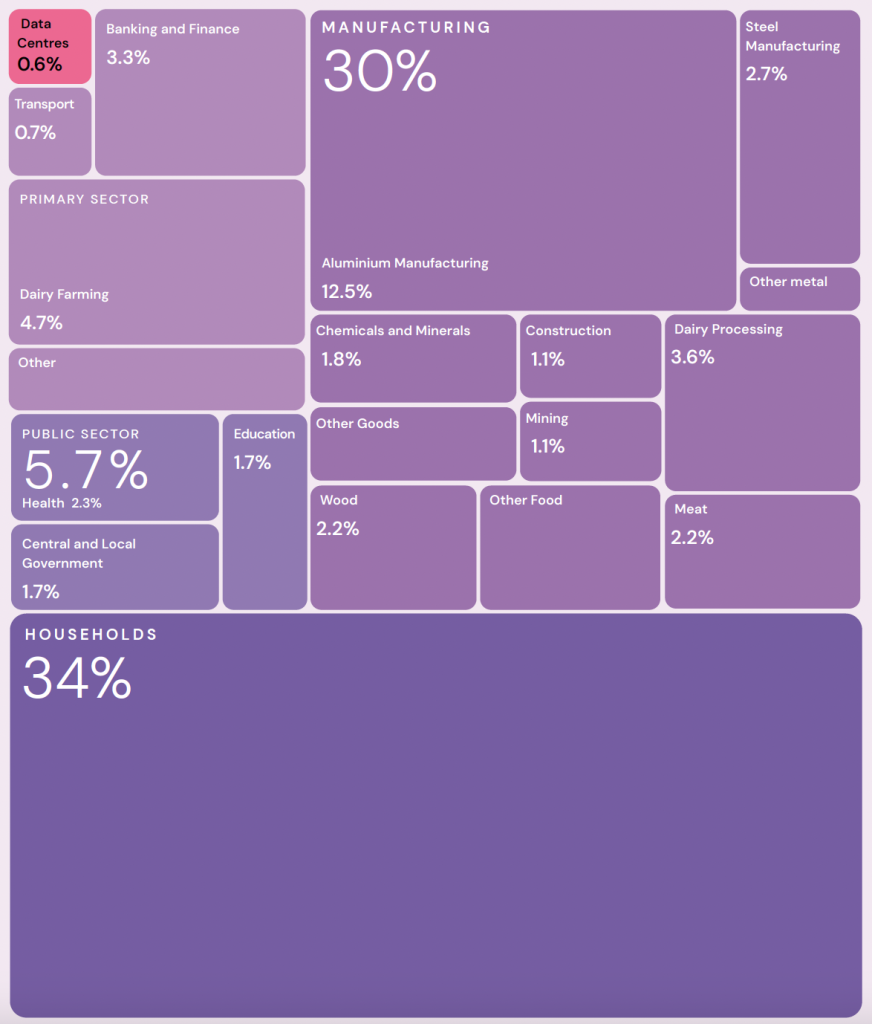
Two key infographics from Tech New Zealand’s 2025 report help put the sector into clear context: one outlines New Zealand’s current and planned data centre footprint and its projected electricity use, and the other shows how electricity consumption is shared across the wider economy. Read together, they explain both why data centres matter and why their energy use needs to be understood proportionately.
New Zealand already has 56 operating data centres, with a further 20 new facilities in planning. The same material reports around 104,000 megawatts of deployable capacity in 2025. This matters because demand for digital services is rising quickly — including data-intensive technologies like AI, cyber security, and advanced analytics. Building local capacity keeps data closer to users, improves reliability, and reduces exposure to international disruptions.
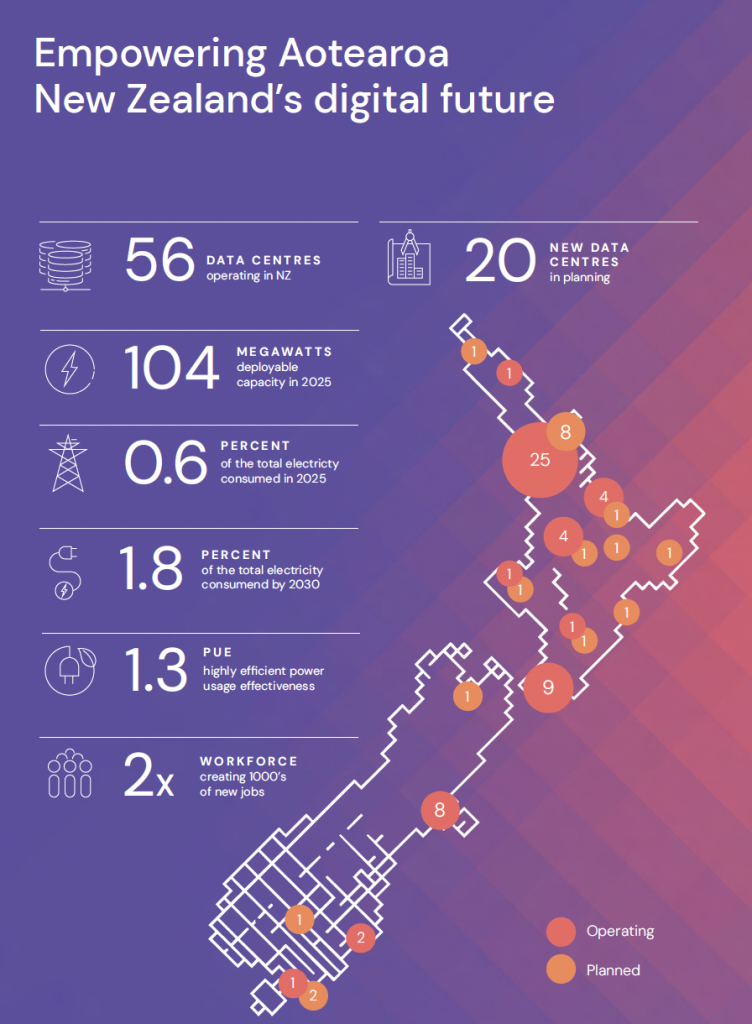
On electricity use, the data provides a useful reality check. It projects that data centres will consume around 0.6% of New Zealand’s total electricity in 2025, rising to 1.8% by 2030. These figures acknowledge that demand will grow, but also show the sector remains a relatively small part of national electricity consumption.
The second infographic helps translate those percentages into perspective. EECA’s 2023 electricity breakdown shows households account for 34% of electricity consumption and steel manufacturing 30%, while aluminium manufacturing uses 12.5%. Against those larger sectors, data centres remain a comparatively modest contributor — even as they underpin essential services and a growing share of the digital economy.
Finally, the data shows that major efficiency improvements already underway, citing a Power Usage Effectiveness (PUE) of 1.3, which indicates highly efficient facilities where a larger share of electricity goes directly to computing rather than overheads like cooling.
The facts are there, and show that data centres are foundational to New Zealand’s digital future, their growth is planned and measurable, and their electricity use — while important to manage — is often overstated without this wider context.